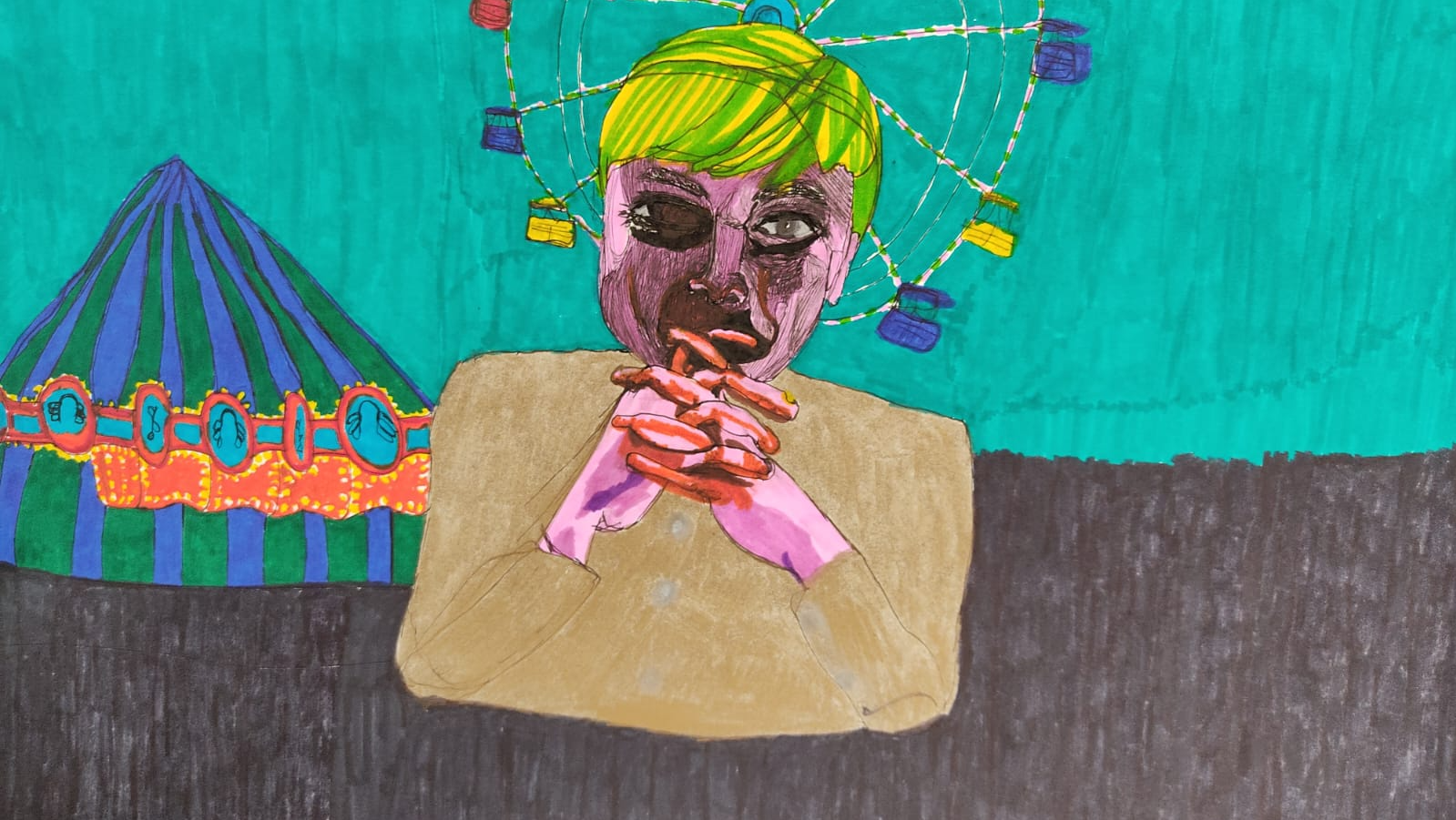
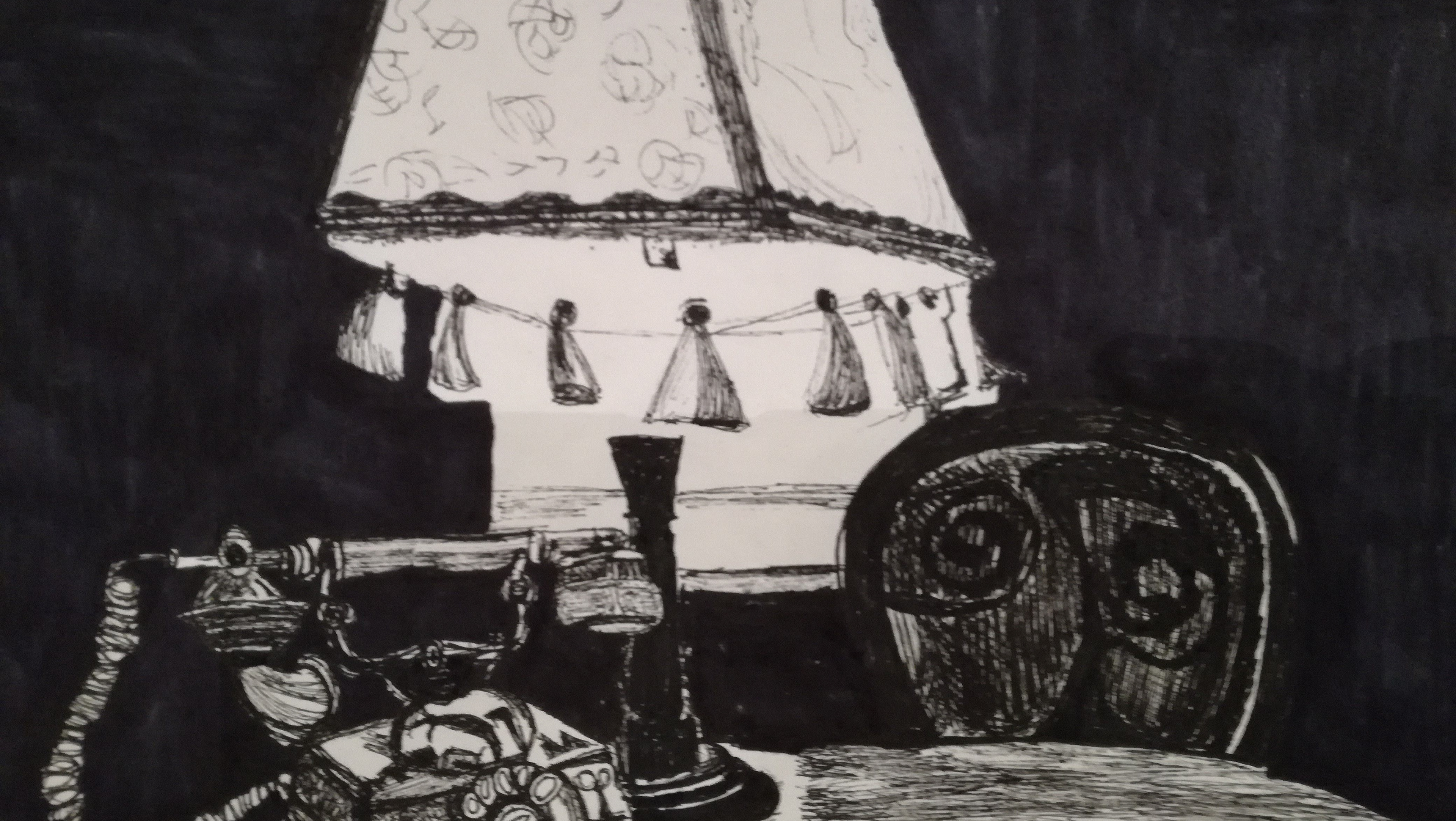
Loosely inspired by the fairytales of hermann hesse
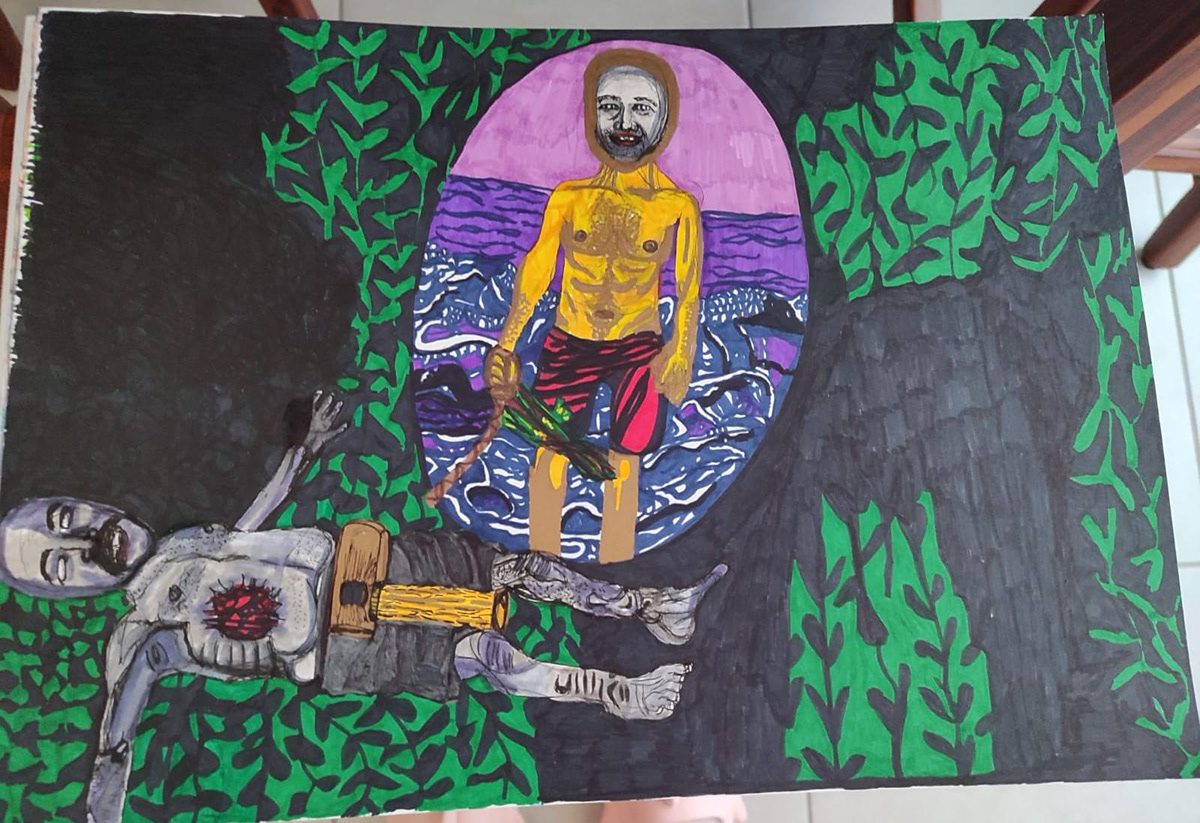
the forest dweller
Inspired by a reimagined fairytale, "The Forest Dweller" depicts an inner confrontation between two selves: the shaman and the skeptic. The older, blind figure represents superstition, rituals, mysticism, and empty traditions, while the younger figure, disillusioned and restless, seeks clarity through reason. In the story that inspired the work, the young man confronts the shaman, eventually rejecting inherited beliefs and killing him with a hammer, an act both violent and symbolic
The two figures are ultimately one and the same, mirrors of a self caught between false identity and truth. By killing the shaman, the younger self embraces logic and discards illusion. Yet this transformation comes with a cost: the end of comforting delusion, and the beginning of an unflinching clarity. The old man’s blindness is not accidental, it is the blindness of superstition, unseeing but seductive.
Created before the full symbolism of superstition versus reason was consciously understood, the drawing reflects a raw psychological reckoning. A self is both revealed and undone in the duel.
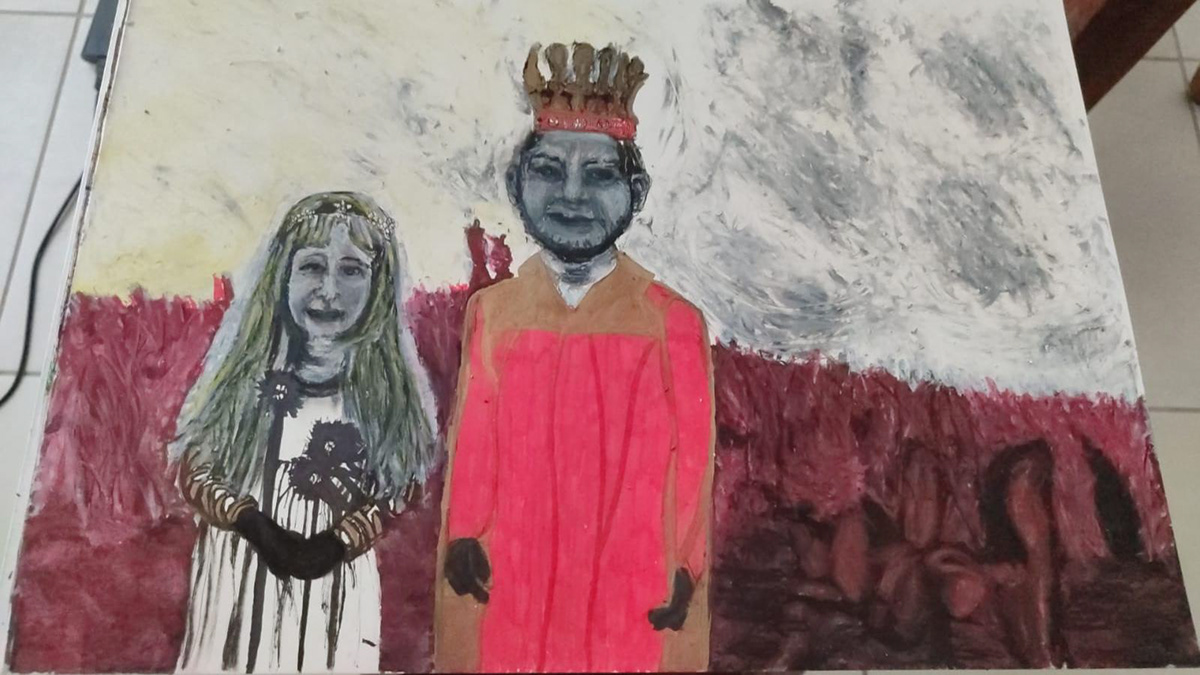
Strange news from another planet
Loosely inspired by Hermann Hesse’s "Strange News from Another Planet", this drawing explores the emotional dissonance between public image and private truth. Distorted, semi-smiling faces, drawn from a close friend, reveals the vulnerability usually hidden behind social masks.
Set against a mythic narrative of a messenger journeying through worlds of love, war, and loss, the work becomes a meditation on duality: hope and despair, innocence and violence, youth and age. Layered with allusions to the devastation war, The Messenger reflects the inner fight to preserve tenderness in a world in crisis.
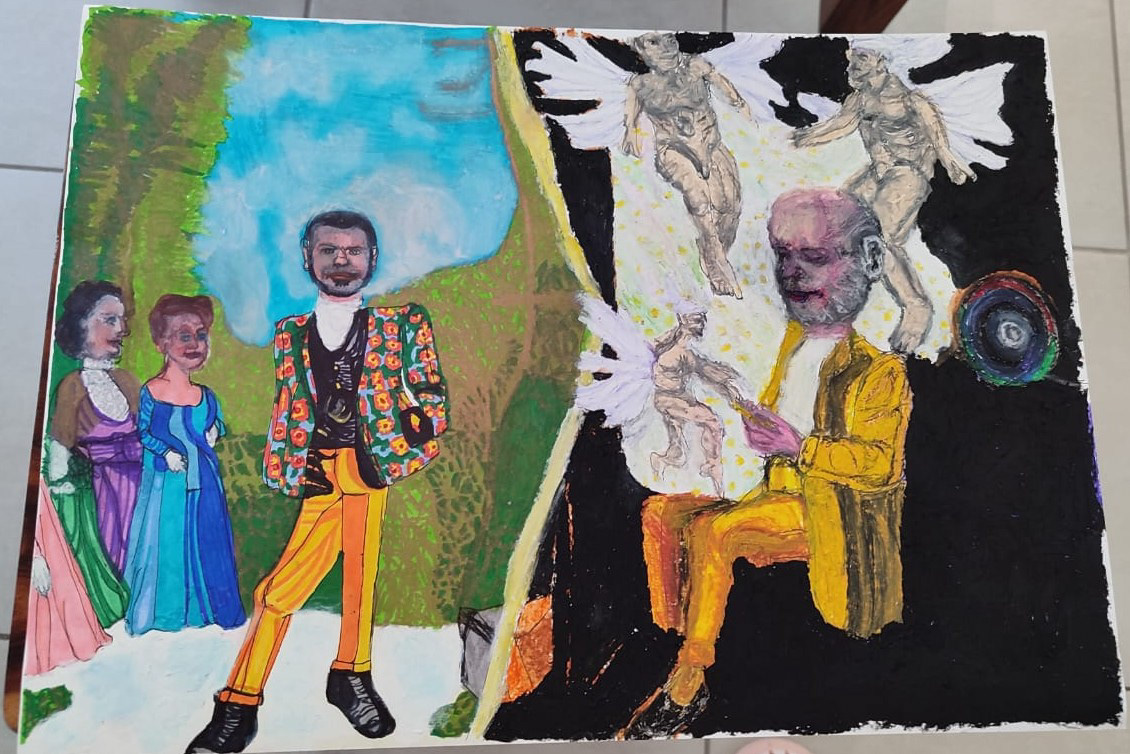
Augustus
Inspired by a reinterpreted fairytale, "Augustus" explores the arc from conditional love to self-acceptance. In the original tale, a mother wishes for her son to be universally loved, a gift that strips him of empathy and depth. Only in returning home does he make his own wish: to love others in return.
This drawing reimagines that journey through a queer lens. On the left, the young man is adored but hollow, surrounded by women yet alienated from himself. On the right, he sits in quiet self-realization, encircled by male fairies, symbols of both queerness and spiritual kinship. The work becomes a visual elegy for inherited expectations and a tribute to the courage of becoming.
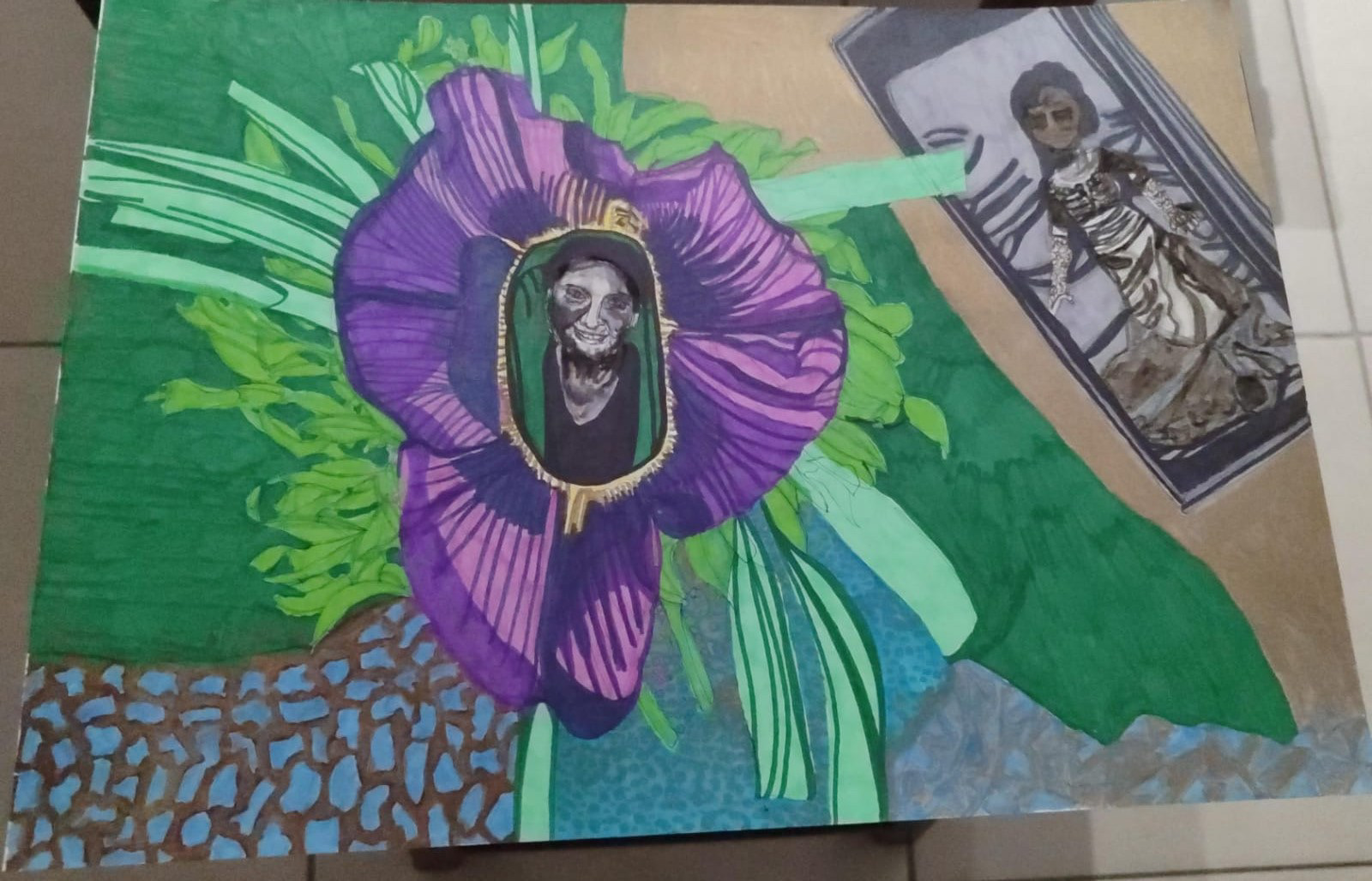
iris
Drawn from a reinterpreted fairytale, this work traces an academic’s passage from childhood enchantment to spiritual rebirth. Through love, loss, and the shedding of adult constraint, she seeks a memory that unlocks her true self, ultimately crossing into the spirit world, never to return. A reflection on personal grief and transformation, the drawing becomes a quiet elegy for what must be lost to be found.
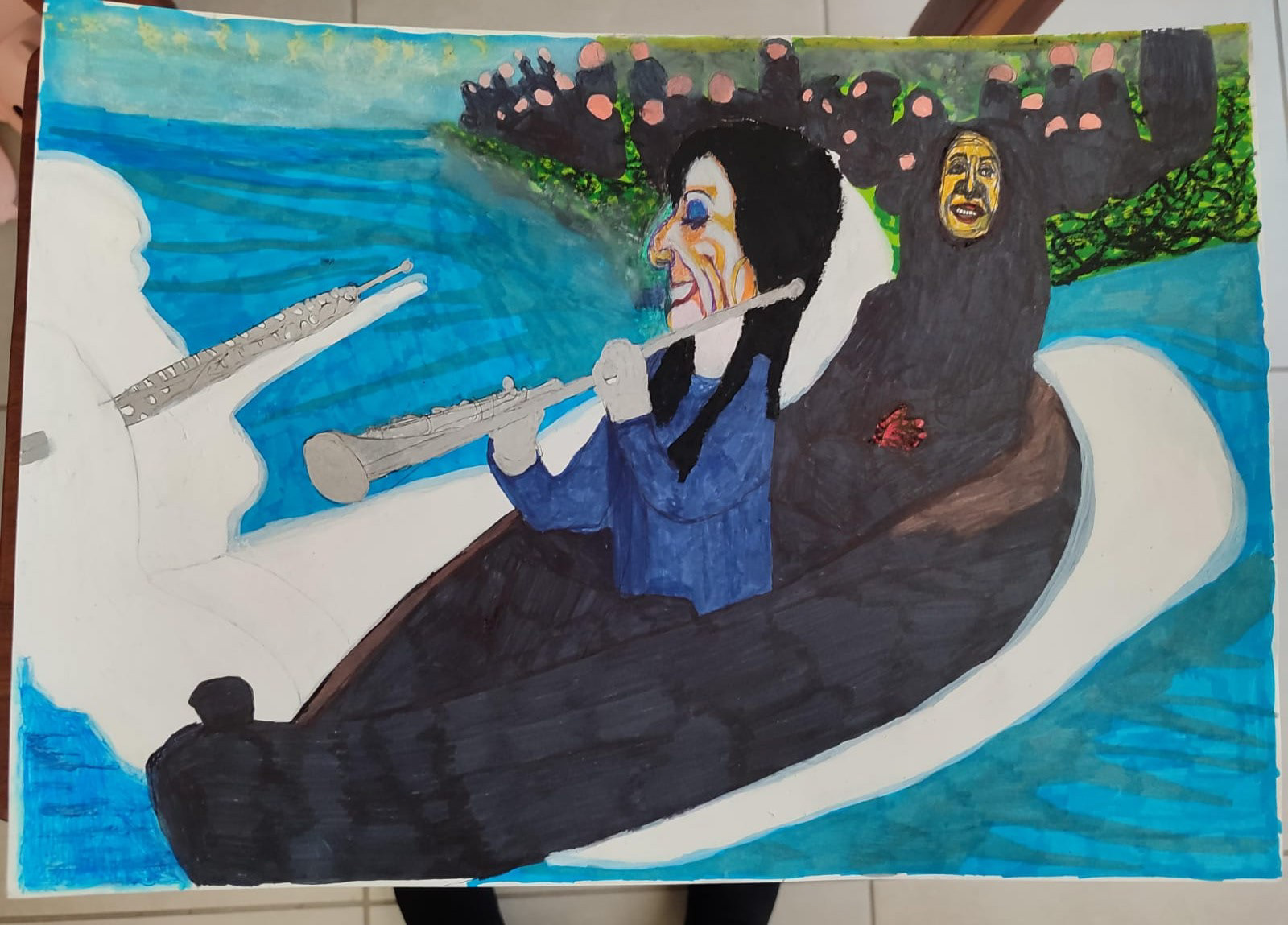
the flute player
Inspired by a reimagined fairytale, "the flute dream" captures the quiet metamorphosis of a therapist in formation. Beginning as a girl whose voice knows only light, the young girl boards a boat not to flee, but to listen. There, she meets the voice of experience; an older woman who sings of grief and strength. As the young girl absorbs these songs, her own begins to change.
In this drawing, she stands mid-transformation: the youthful self still present but dissolving, the elder emerging. The gathered figures behind her serve not only as those in need of healing, but as witnesses to the healer’s becoming. A reflection on empathy, endurance, and the quiet courage of those who hold space for others’ pain.