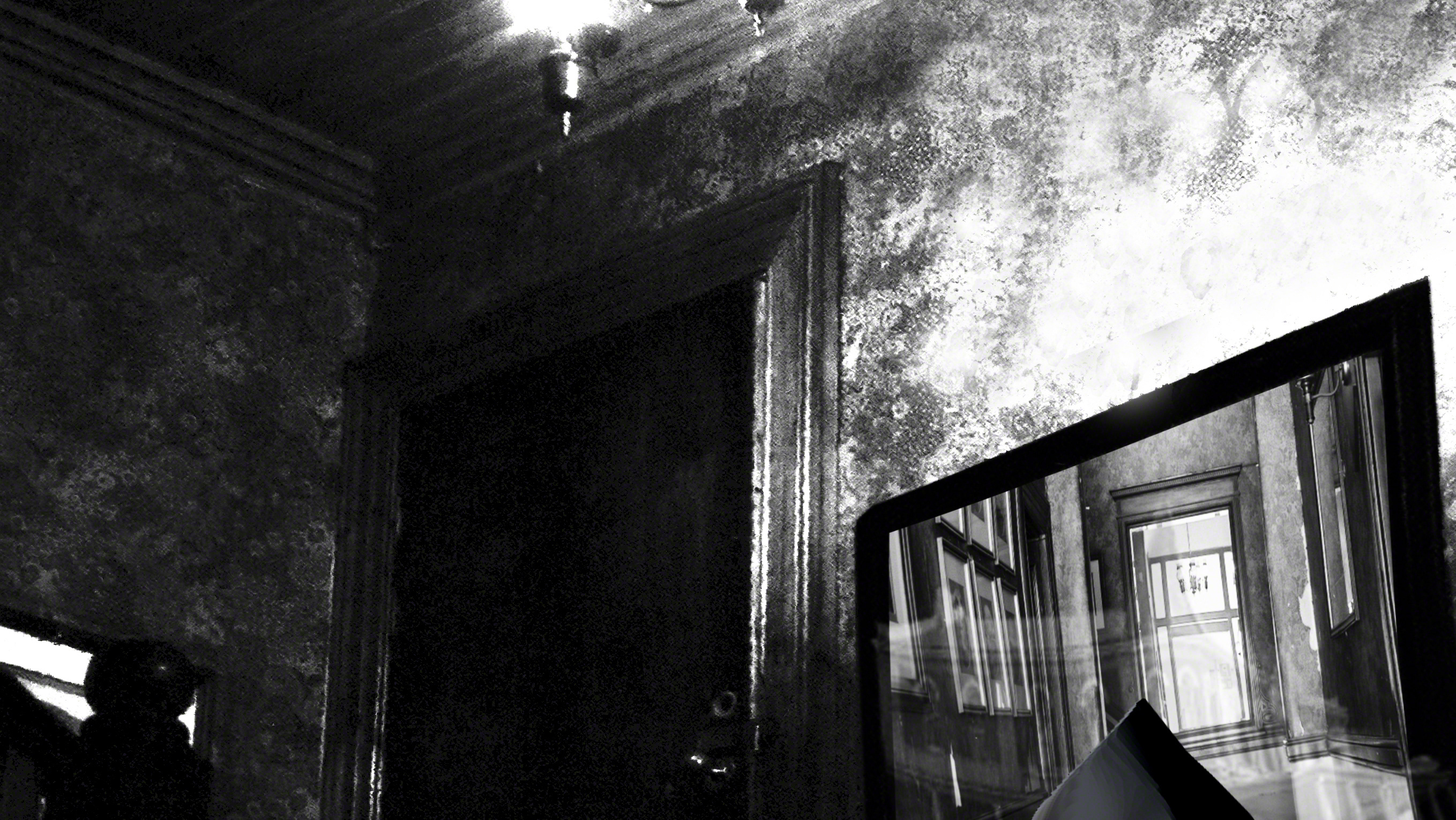
playground (2017 - 2018)
We all suffer from some form of addiction. For most of us it is manageable and mild and does not lead to ultimate ruin. but for others it can be fatal. Here, the homeless woman is in an opulent nightclub, a place she would never be allowed to enter, the nightclub in her mind being the last thing she sees, wanting to be visible yet remaining invisible.
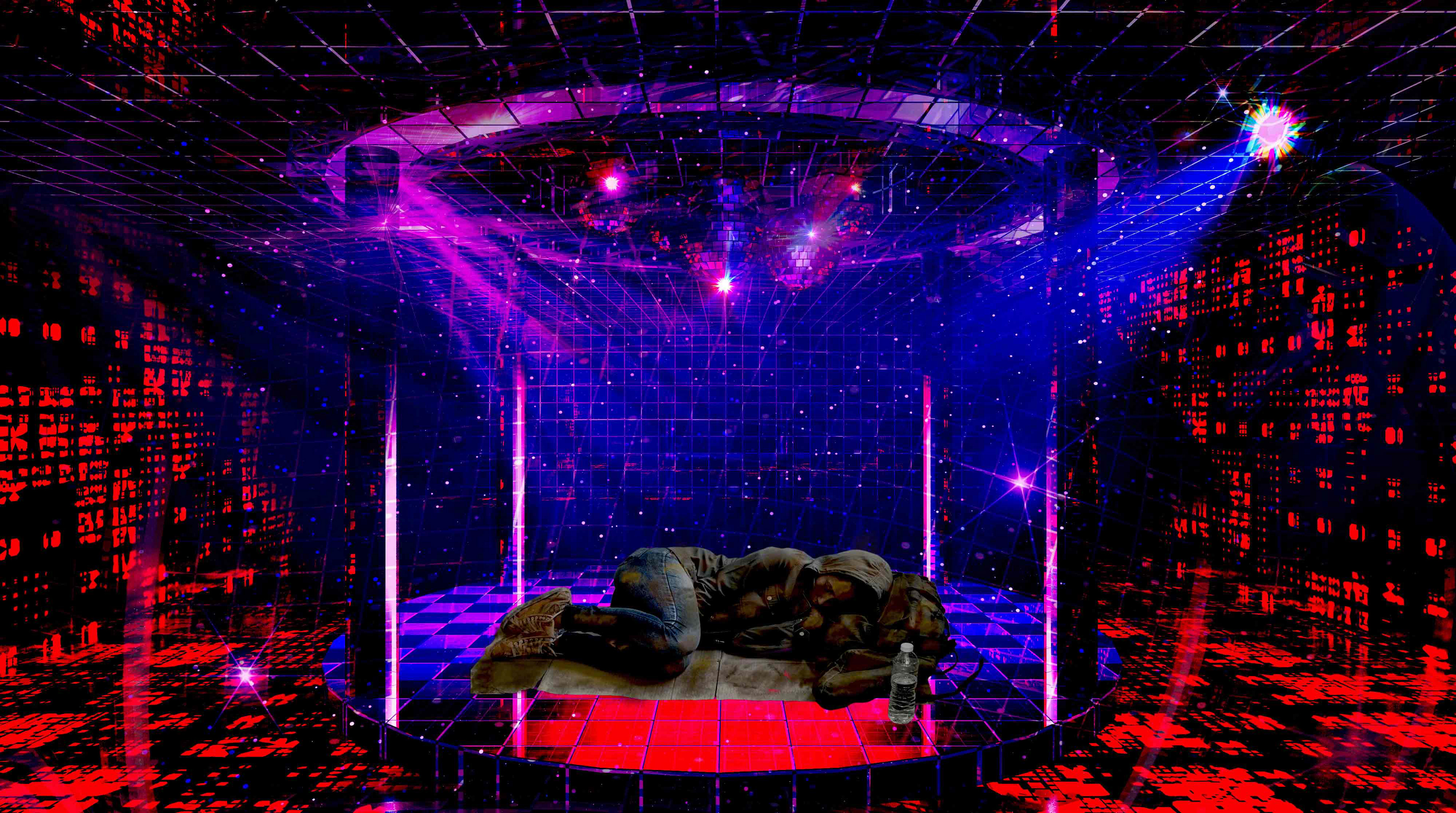
Playground I

Playground II
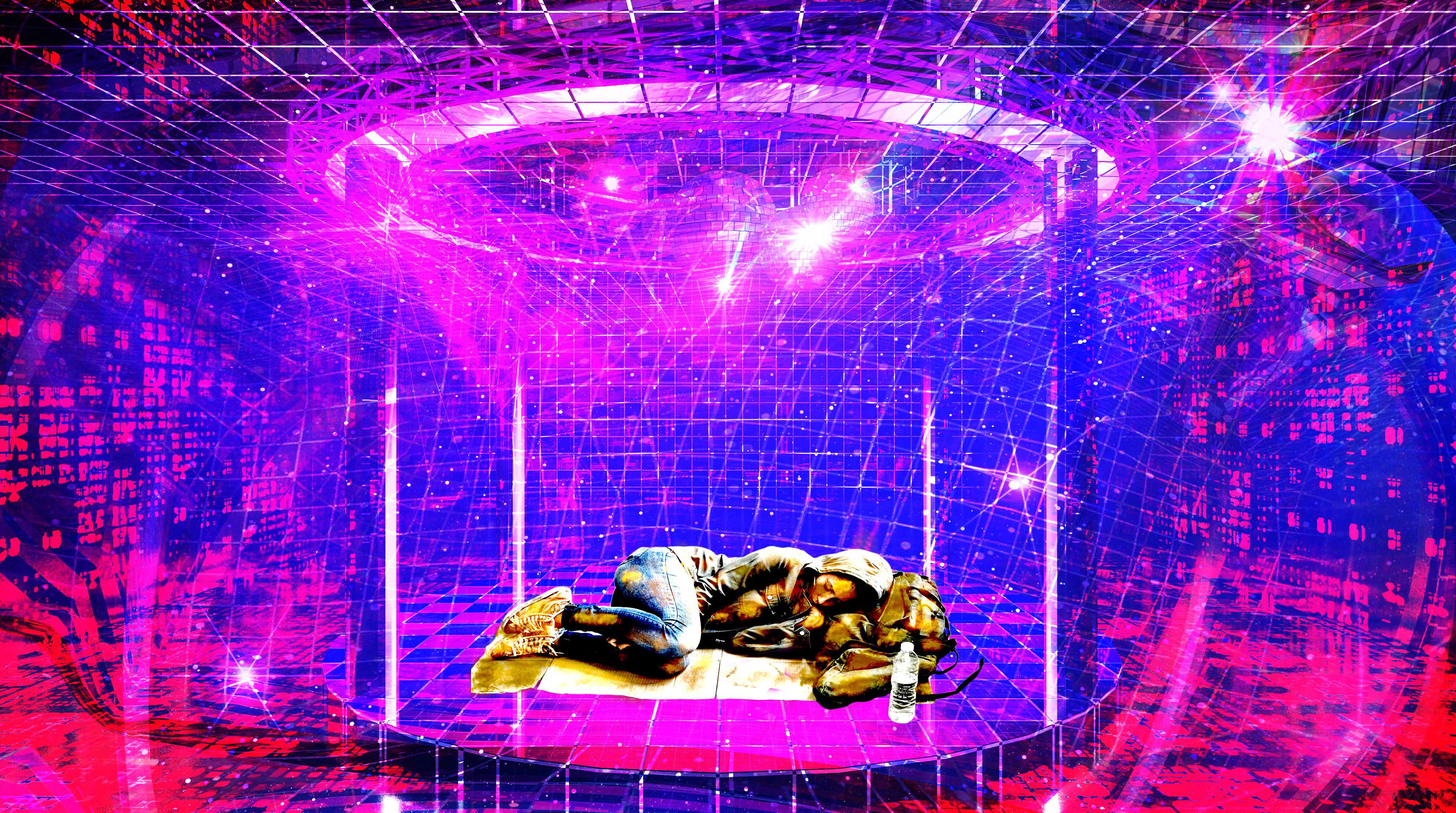
Playground III
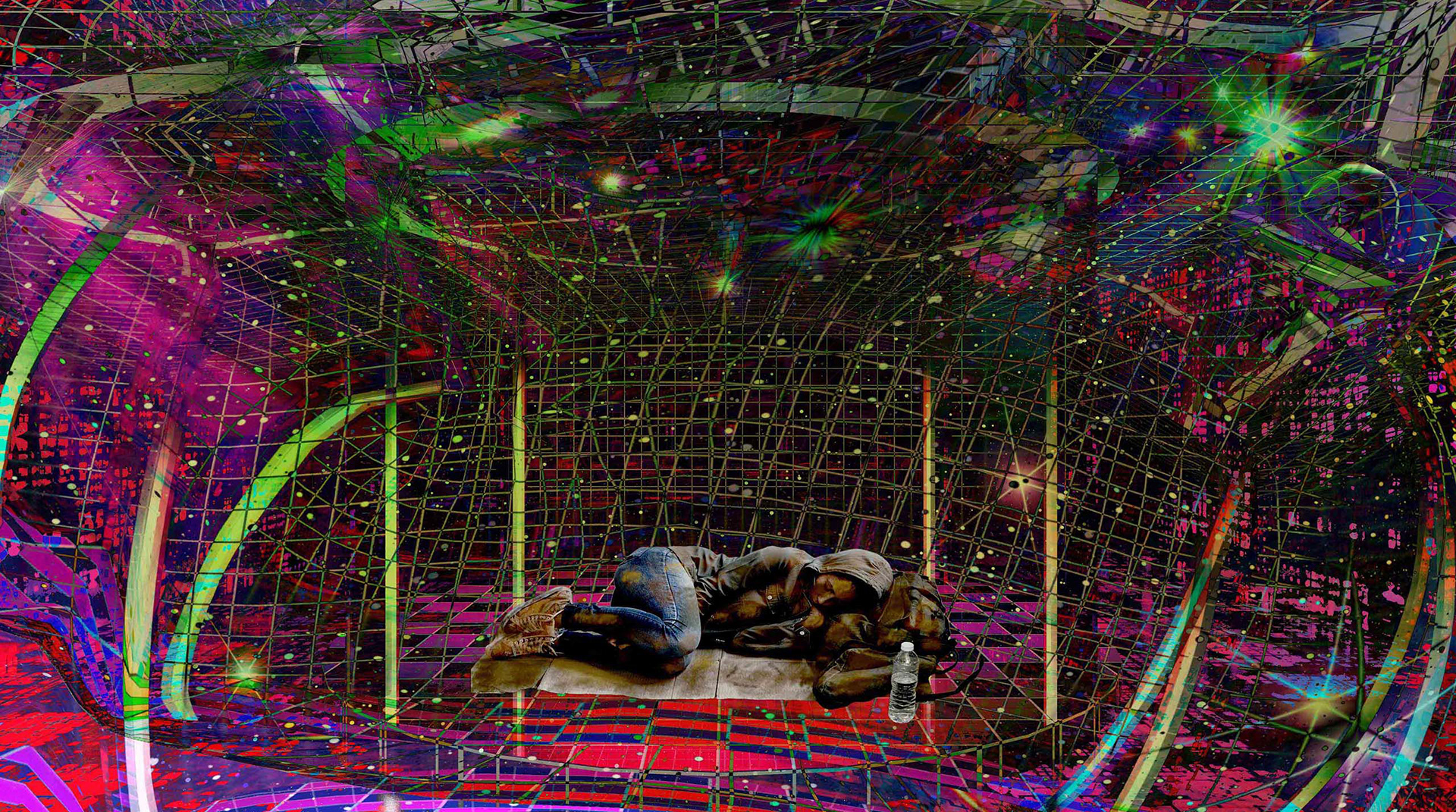
Playground IV

Playground V
out with the old (2017 - 2018)
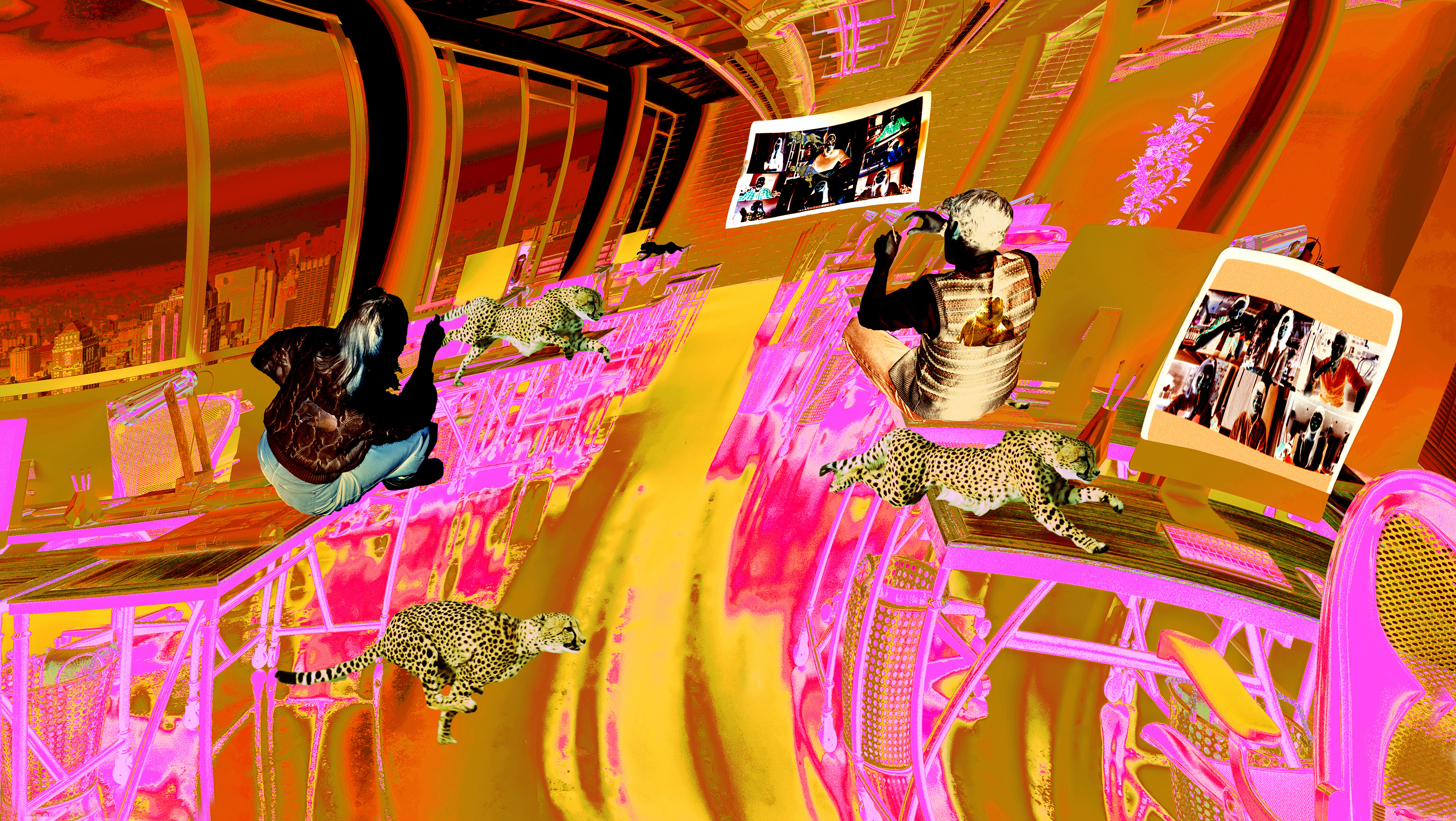
Once one reaches a certain age the workplace can become precarious. Have we saved enough whilst still having lived a worthwhile life? Can we keep up with the latest technology, which determines our ability to successfully navigate society? Or have we slipped into being beyond help...

Out with the old I
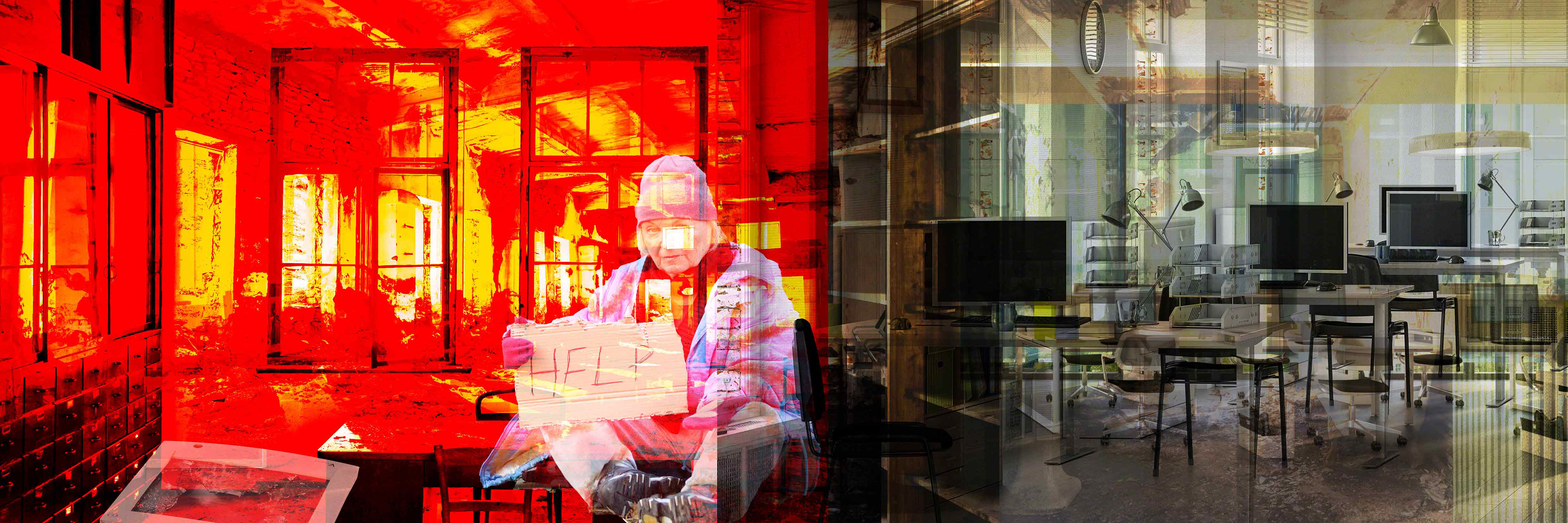
Out with the old III

Out with the old II
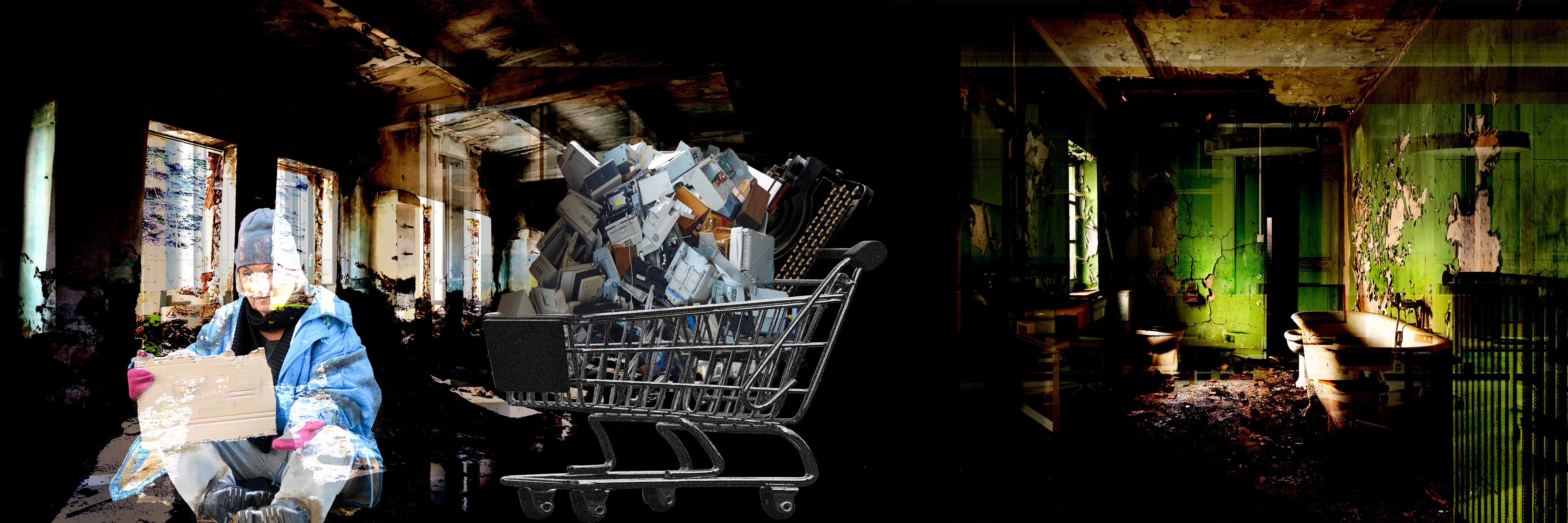
Out with the old VI
hostile habitat (2017 - 2018)
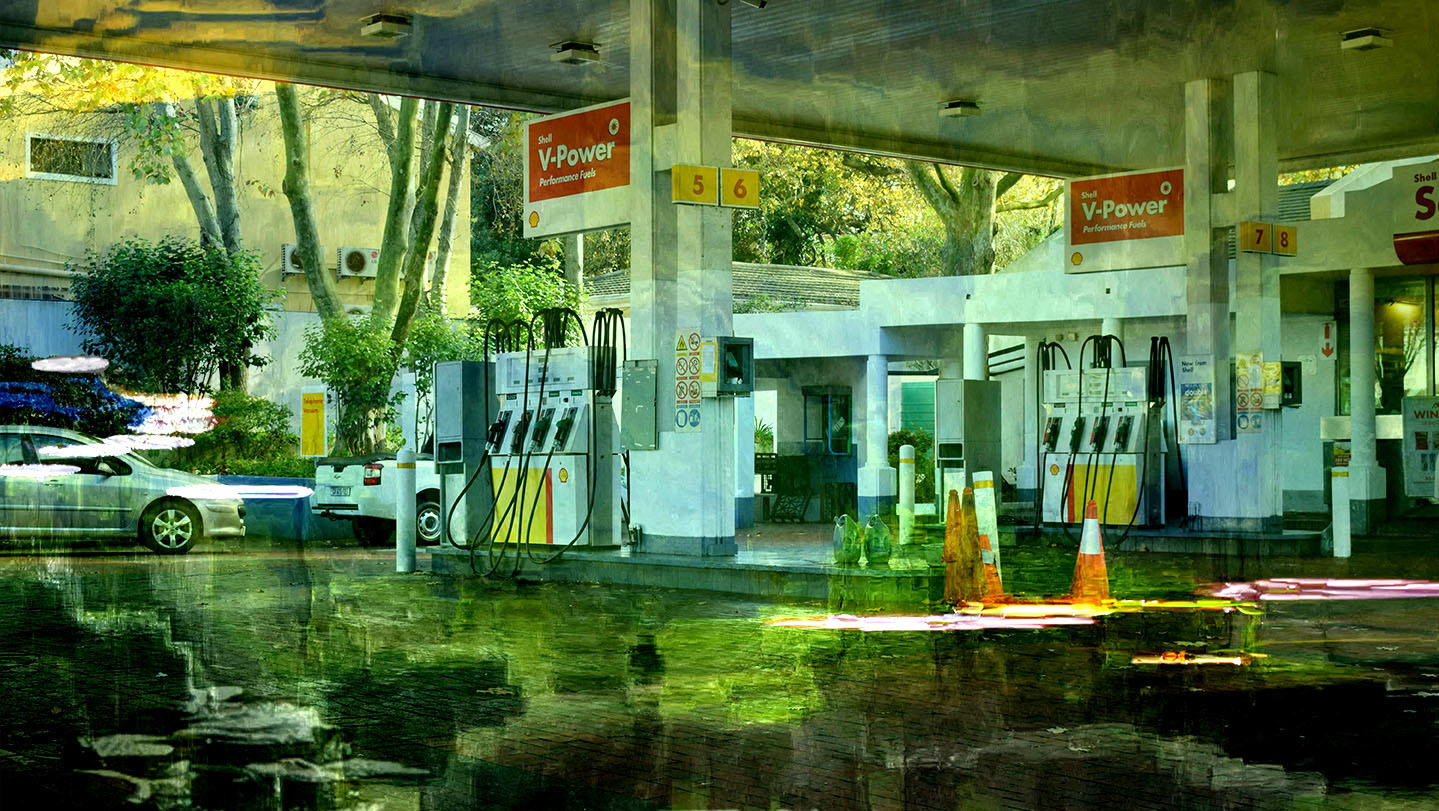
Living beyond our means is something we may fall into. Our environments may be beautiful and pristine but come at a cost and can turn on us when we least expect it.

Hostile habitat I
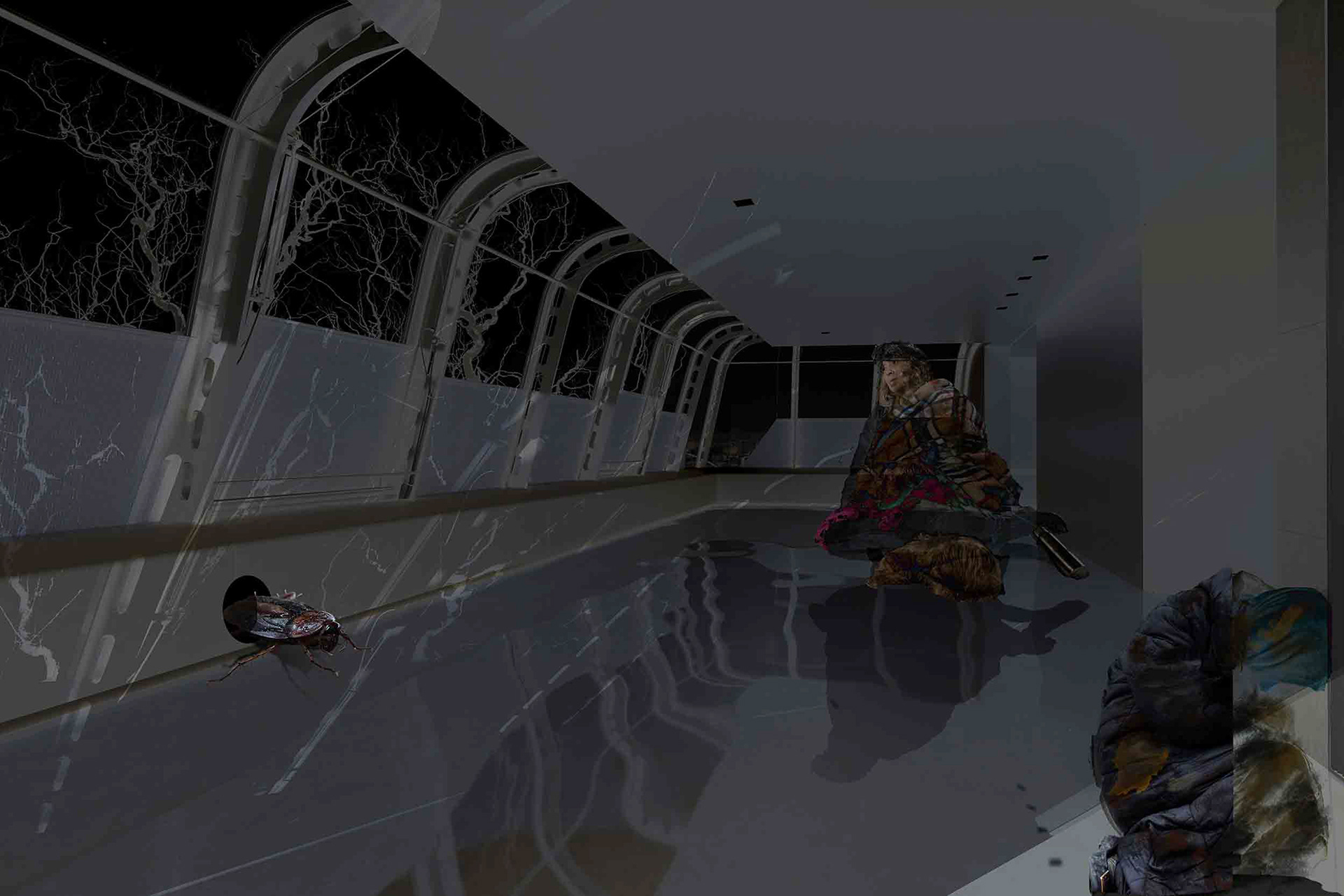
Hostile habitat II
just saying (2017 - 2018)
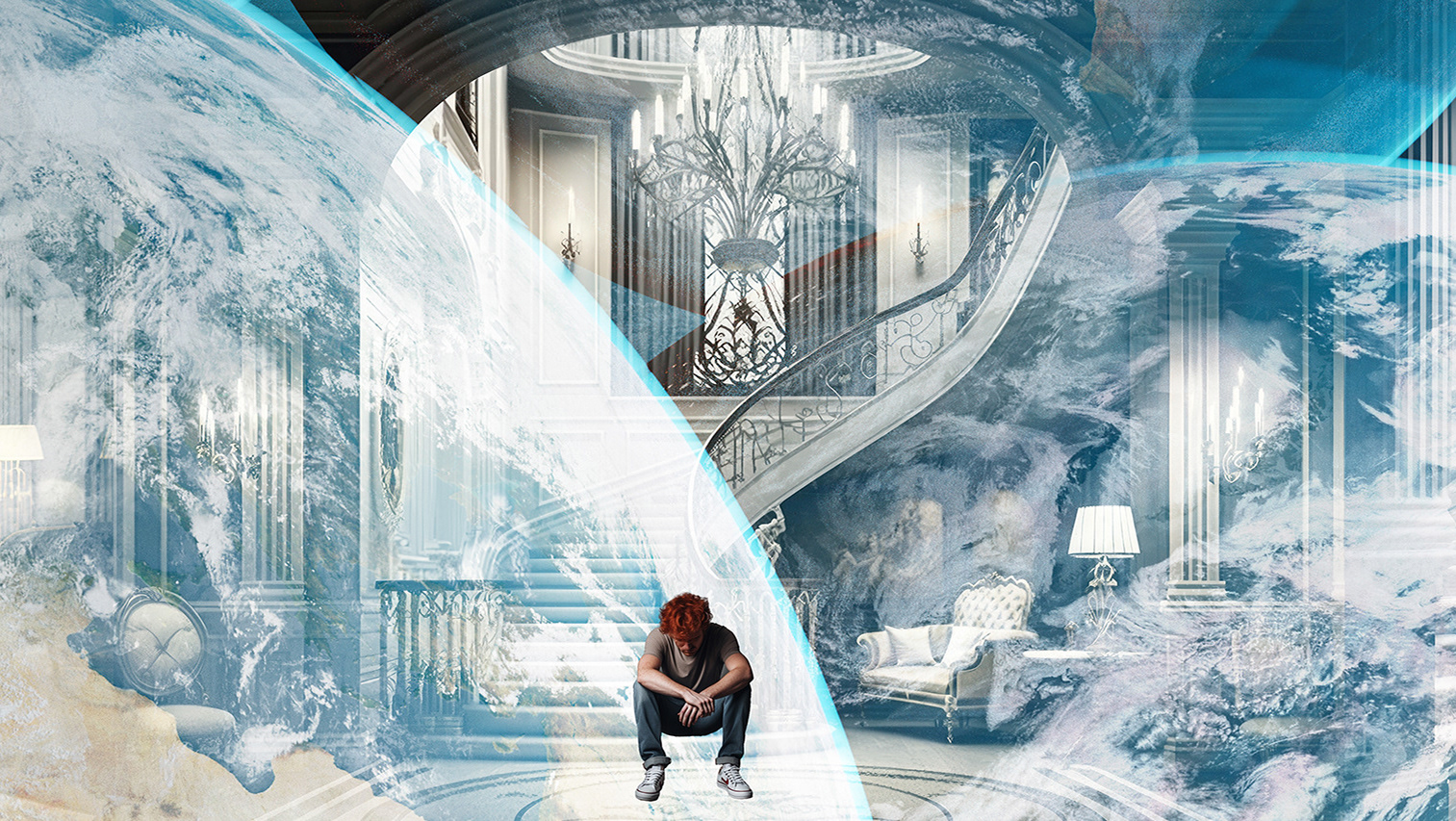
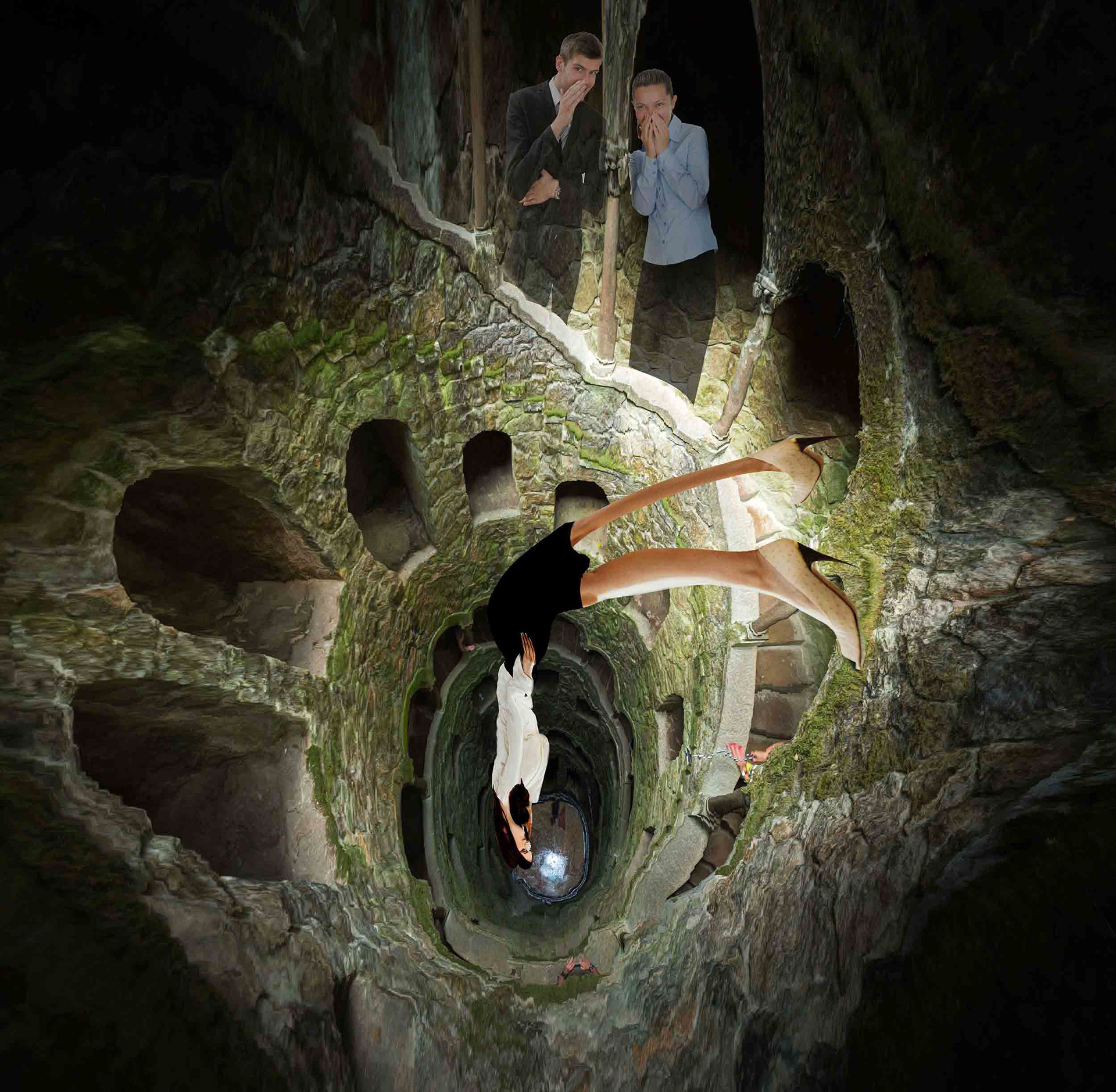
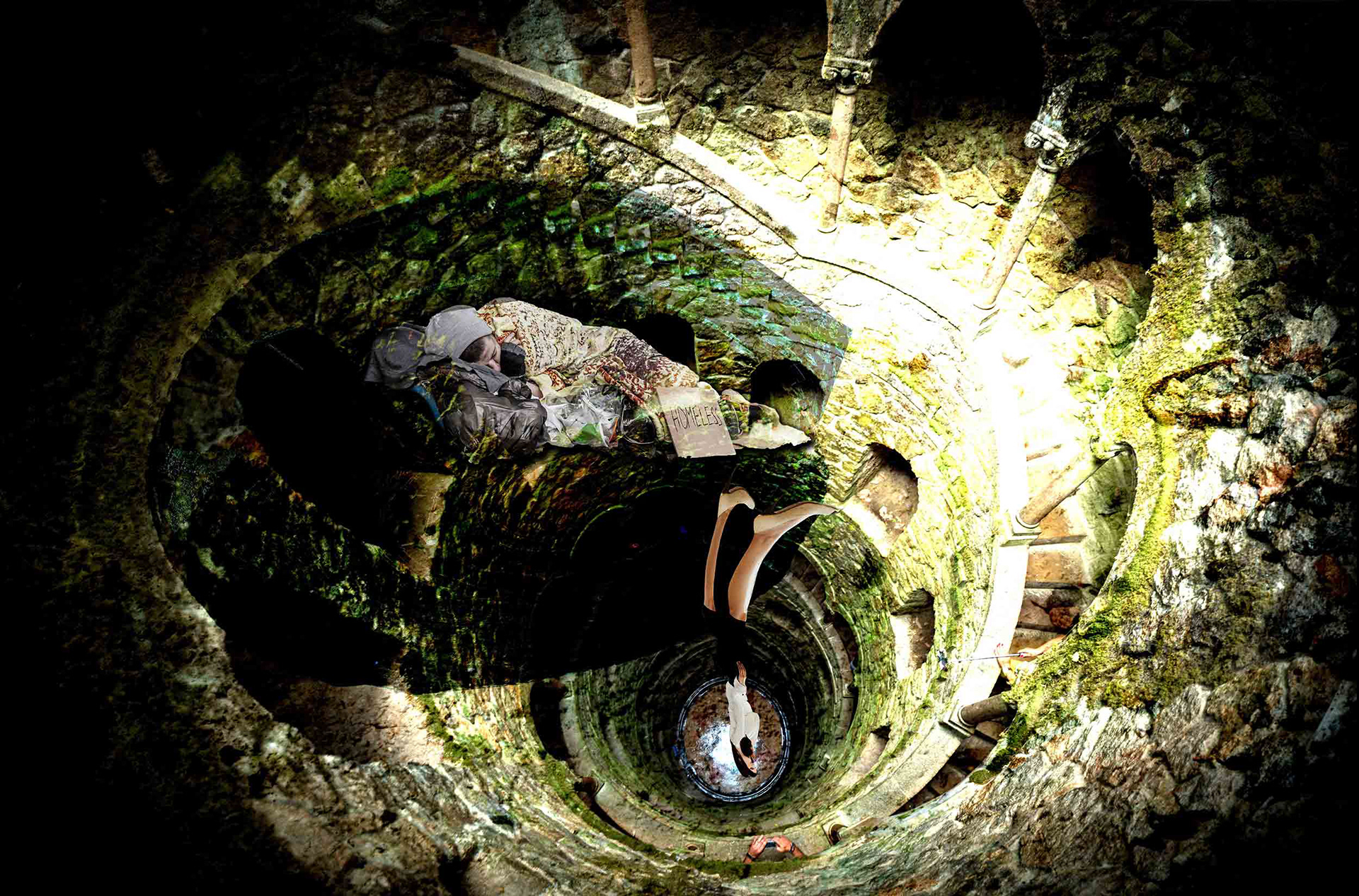
Workplace bullying can lead to compromised performance which can result in a sense of hopelessness, quiet despair and the mistaken belief in a lack of options. One can be homeless in mind if not homeless in actuality.
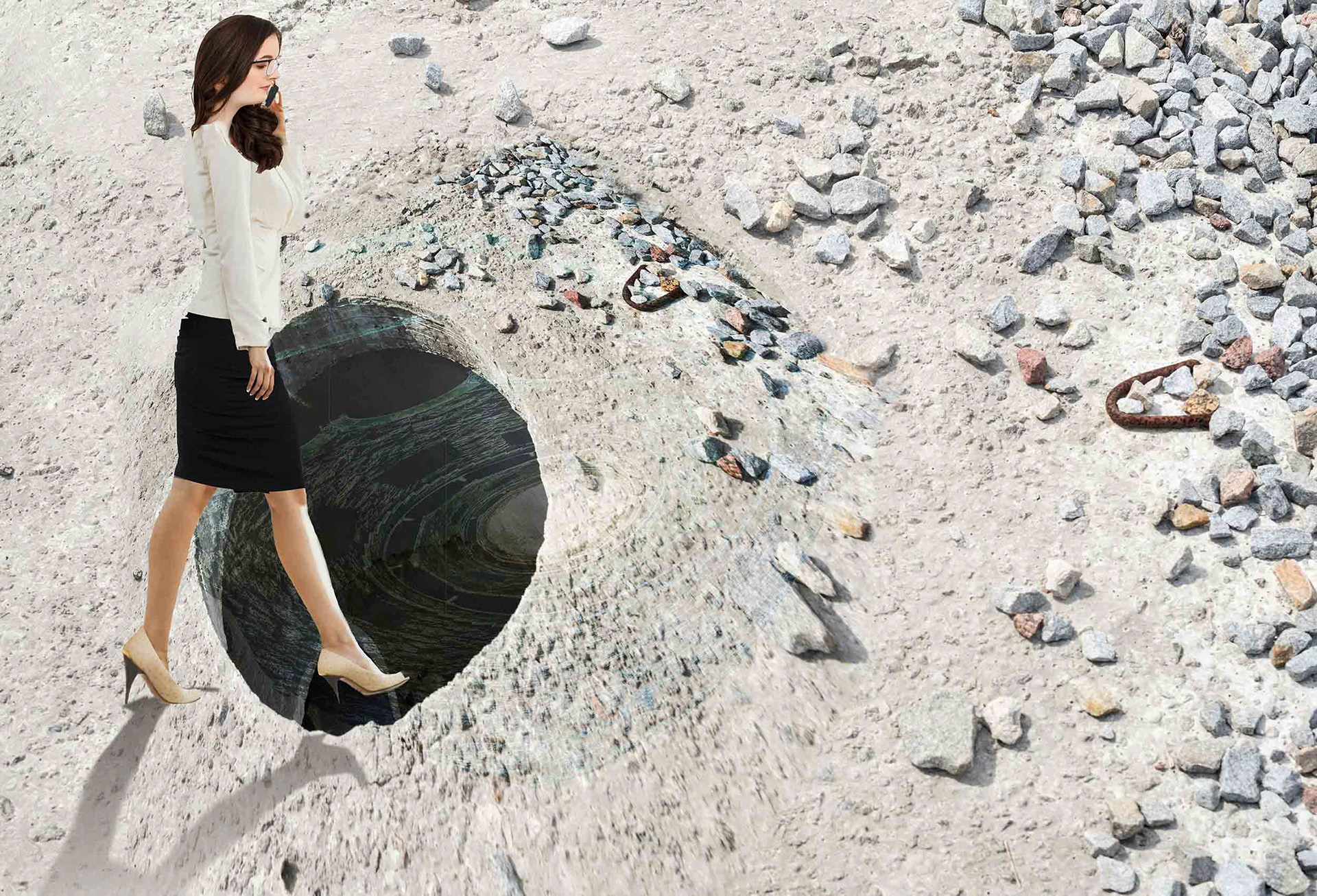
Just saying I
Just saying II
Just saying III

Just saying VI
This body of work began at the traffic lights, in the growing number of people asking for money, and in the uneasy recognition that street homelessness is often the most visible face of a much larger crisis.
In 2018, homelessness in Cape Town was being described as spreading alongside a weakening economy, while reports from Johannesburg showed how people living on the street were made vulnerable not only by poverty, but by harassment, removal and public suspicion.¹ ²
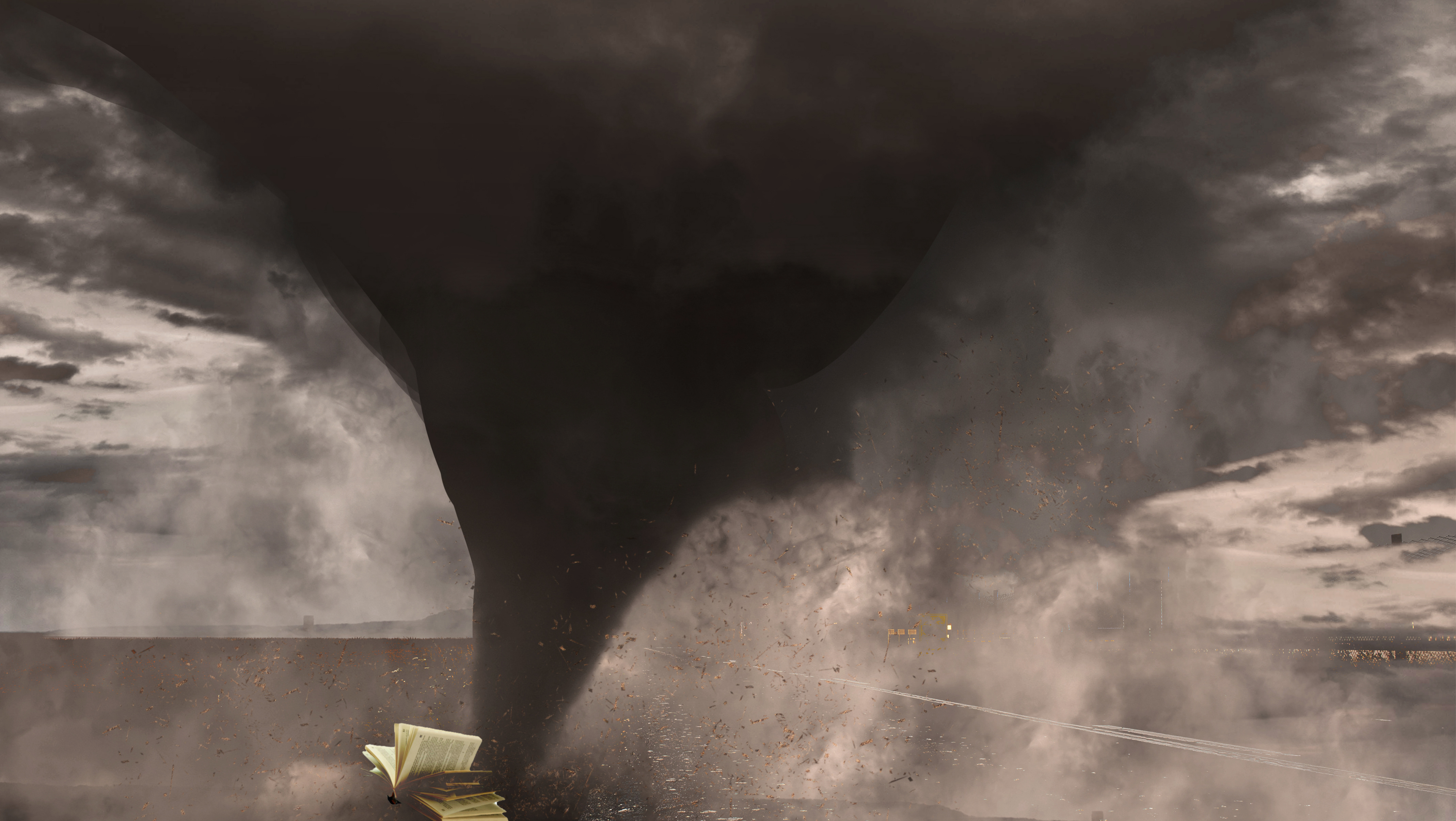
The cut-and-paste form of these photo collages echoes that condition of rupture. Figures are assembled from fragments, displaced from any stable setting, never fully held by the spaces around them. Their faces are often obscured by posture, by objects, or by environments that seem to resist them. The works speak to the paradox of homelessness: extreme visibility, and at the same time a profound social invisibility. One sees them, and yet does not truly see them.
The aesthetic surface of the images belies the realities beneath them: forms of exposure, fear and vulnerability that I can approach imaginatively, but cannot truly claim to know.
These stories are not mine to claim as biography. They arise instead from a wider atmosphere of precarity. In 2018, South Africa’s official unemployment rate remained high, while fuel prices placed further pressure on daily life. Stats SA noted that annual fuel inflation reached 25.3% in July 2018, the highest rate since December 2011, and that rising fuel costs affect consumers both directly and indirectly through the cost of goods and services.³ ⁴
In that climate, the fear of losing one’s footing is never far away. These works draw on a collective anxiety shaped by poverty, exclusion and the knowledge that a single misstep can alter the course of a life. Time and place become unstable, woven from other people’s photographs into a patchwork of dislocation. What emerges is not documentary, but a psychological landscape: homeless in body, homeless in mind.
sources
Greg Nicolson, “Homelessness Spreads in Cape Town as South Africa Economy Flags,” Daily Maverick, 19 November 2018, https://www.dailymaverick.co.za/article/2018-11-19-homelessness-spreads-in-cape-town-as-south-africa-economy-flags/.
Ian Broughton, “Homeless Poorly Treated in Bedfordview,” GroundUp, 8 October 2018, https://groundup.org.za/article/homeless-poorly-treated-bedfordview/.
Statistics South Africa, “Quarterly Labour Force Survey: QLFS Q1:2018,” 15 May 2018, https://www.statssa.gov.za/?p=11139.
Statistics South Africa, “Fuel Inflation Remains in Double-Digit Territory as Prices Rise,” 20 September 2018, https://www.statssa.gov.za/?p=11558.